

There is an image that, when seen from space, feels almost like a visual heresy: the Earth held by a blue band so thin that it is difficult to believe that breath, temperature, and life itself rest there. It is not a mass. It is not a wall. It is an edge. A minimal line that, nevertheless, fulfills an absolute function.
There is something liturgical about that vision.

At orbital dawn and dusk, that line returns as if obeying a higher rhythm: morning and evening, morning and evening, not as spectacle, but as insistence. As continuity. As a form of silent permanence. In that return there is something that recalls the ancient language of the continual sacrifice: not the violence of an isolated act, but the repetition of a presence that does not abandon its post.
And if one knows how to look, leather belongs to that same theology of matter.

Because leather, before it was luxury, was guard. Before it was style, it was boundary. Before it was an object of desire, it was a surface of expiation against exposure: the layer placed between the body and the abrasion of the world. Its greatness was never in excess, but in that ancient vocation to resist, protect, secure, carry, and accompany daily life without interrupting it. The record itself makes it clear: leather was one of humanity’s oldest everyday technologies, able to protect the body, hold tools, seal objects, and, over time, transform itself into a language of design.

That is why to speak of leather seriously requires leaving behind superficial vocabulary. The connoisseur does not see mere “skin”; he sees a discipline of transformation. He sees a perishable substance converted into a stable, flexible, portable surface. He sees a constellation of decisions: how it is tanned, which layer is used, how it is finished, what kind of tactility, aging, and material truth is being pursued. Leather is not a flat substance; it is an architecture of judgment.
This is where its deeper dimension begins.
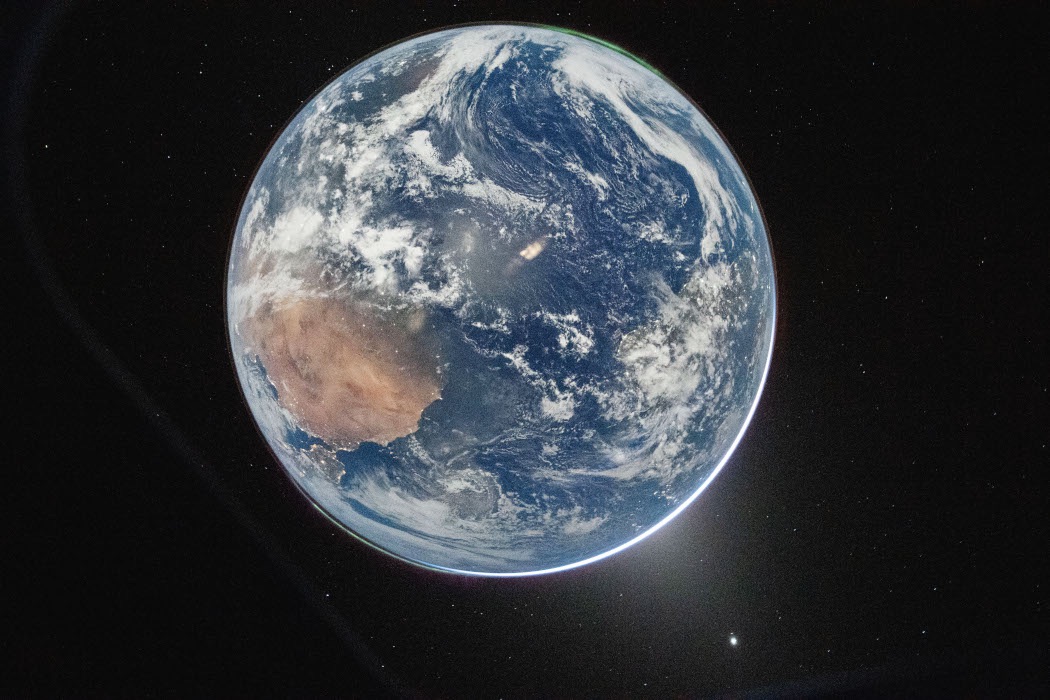
Just as the Earth’s blue line does not impress by thickness but by functional supremacy — because it defines the boundary between the habitable and the void — leather does not command by volume either. It commands by craft. By its ability to become a frontier between fragility and permanence. Between body and environment. Between use and ruin.
Every great material carries a mystery: to appear smaller than what it truly sustains.

The atmosphere appears to be a line.
Leather appears to be a surface.
And yet both are systems.
One protects planetary life.
The other, for millennia, protected human life at its daily scale.
It is no accident that leather has survived civilizations, trades, empires, and fashions. The history of leather does not move in a straight line; it moves in cycles. Each time human beings learned to stabilize a hide, they discovered at once a more refined way of inhabiting the world: to cover, to secure, to transport, to persist. Leather entered through necessity and remained through culture.

But there is another level, more subtle still.
Leather does not only protect. Leather remembers.
It is polished where it is touched.
It darkens where it is held.
It bends where life insists.
Its surface records the passing of time without losing nobility. It does not deny use: it absorbs it and transfigures it. That is why patina is not an aesthetic accident; it is a form of memory. A living archive of contact. A slow expiation of wear turned into character. Few materials register use without collapsing their own dignity.

That is the point that separates the profane from the connoisseur.
The profane seeks intact appearance.
The connoisseur seeks permanence with truth.
He knows that a fine edge, a properly executed burnish, an intact grain, an honest finish, or a disciplined stitch are not minor details: they are material doctrines. He knows that real luxury is not always in the logo, but in the edge, in the modulation, in the millimeter repeated with discipline. He also knows that not all leather is equal, because not all permanence deserves the same name. Full-grain, split, aniline, semi-aniline, pigmented, vegetable, chrome: each decision alters the way matter ages, resists, speaks, and remains.
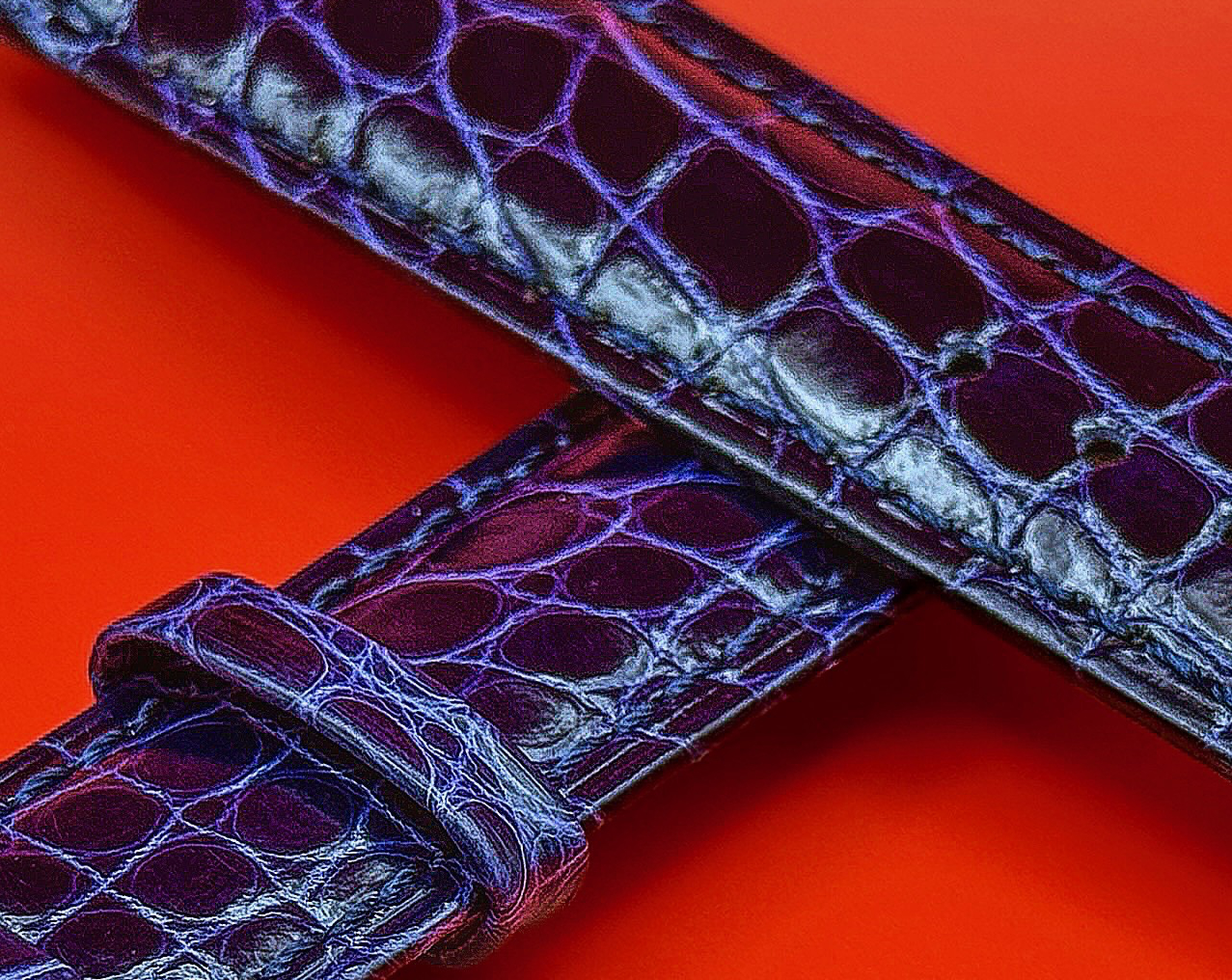
And here the craft reveals its almost sacerdotal dimension.
To tan is not merely to process. It is to order the mortality of a material so that duration may be granted to it. It is to take something vulnerable and give it structure. It is, in a sense, to overcome decomposition through knowledge, patience, and method. That is why well-made leather produces such a distinct impression: it does not seem simply manufactured; it seems consecrated to long use.
In an age of rapid disposal, that idea acquires a rare authority.
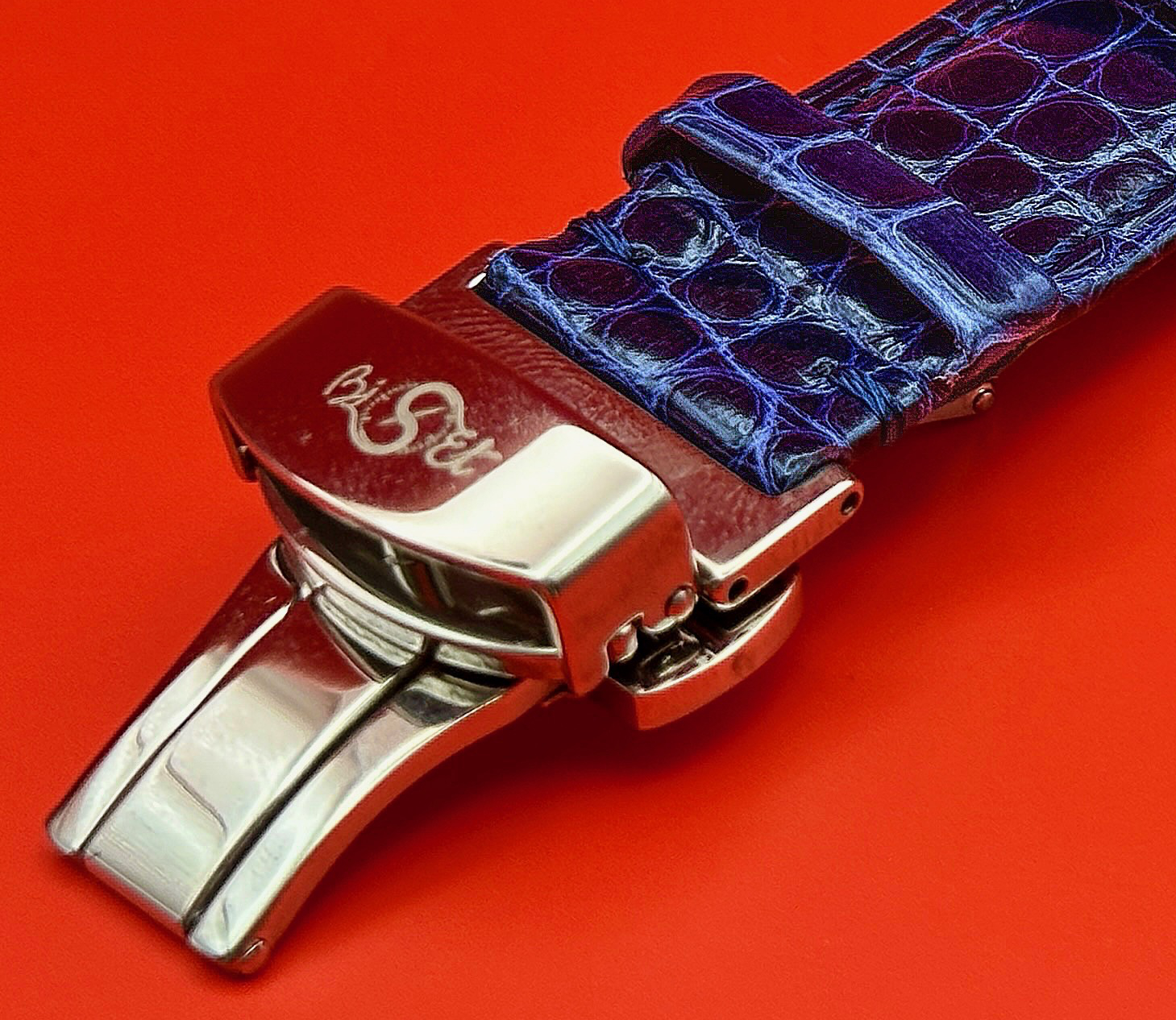
Today too many objects are produced to be replaced, and too few to be accompanied. Leather, when it is well chosen and better worked, still belongs to the second category. It is not born to solve a season, but to endure daily repetition without falling into vulgarity. That is its true prestige: not ornament, but the aptitude to remain.
That is why the analogy with the blue line is not arbitrary.
Both speak of boundary.
Both speak of continuity.
Both reveal that what is decisive may be thin.
Both sustain more than they seem to.
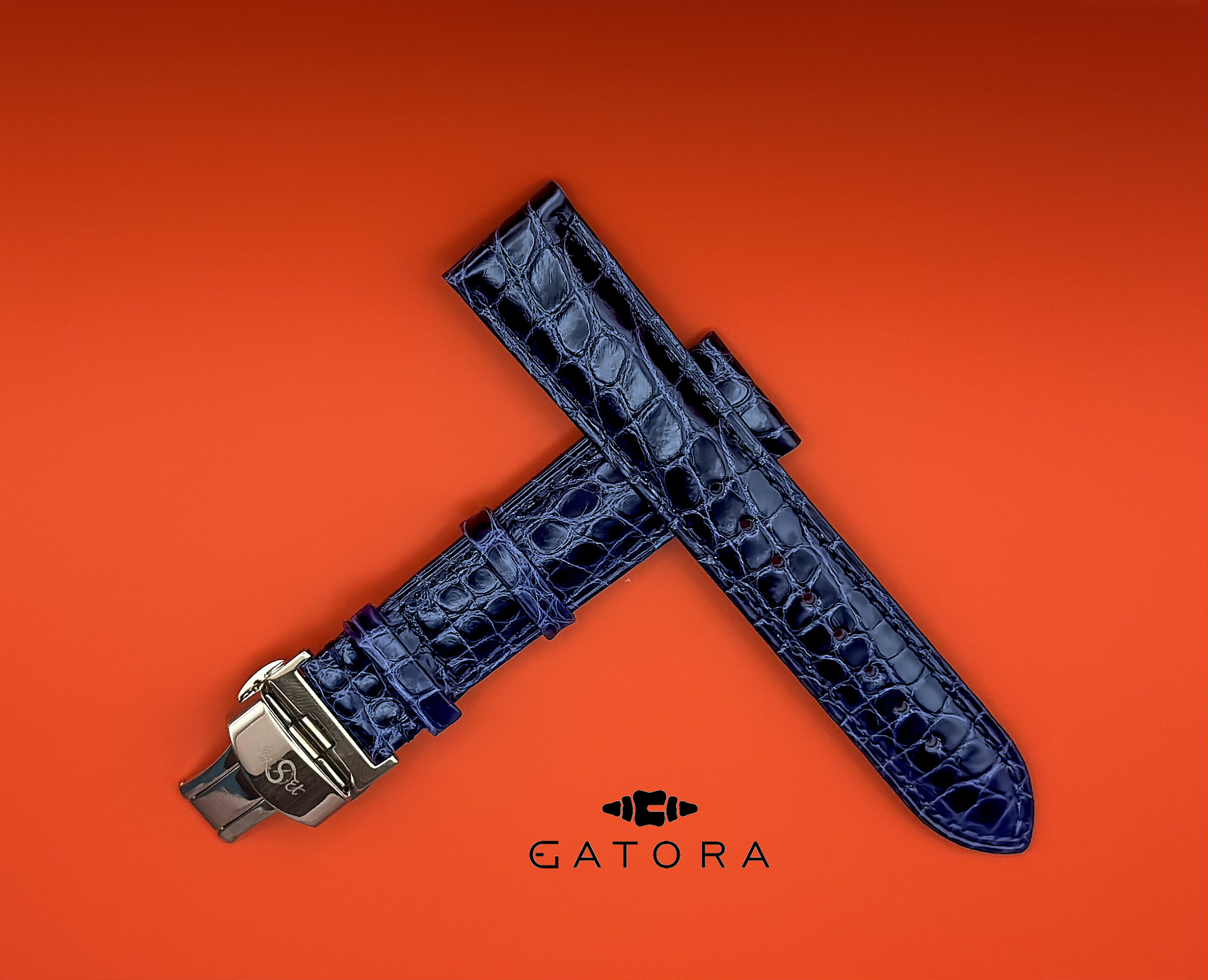
The blue band appears between mornings and evenings as a cosmic reminder that life depends on an invisible fidelity. Leather, at the human scale, repeats that lesson in another voice: the noblest material is not the one that shouts, but the one that remains in service. The one that protects without display. The one that accepts time and emerges from it with more truth.
That is what the connoisseur understands.
That leather is not merely material.
It is a domesticated boundary.
It is tactile memory.
It is embodied continuity.
It is the way the human hand learned to give duration to what is vulnerable.
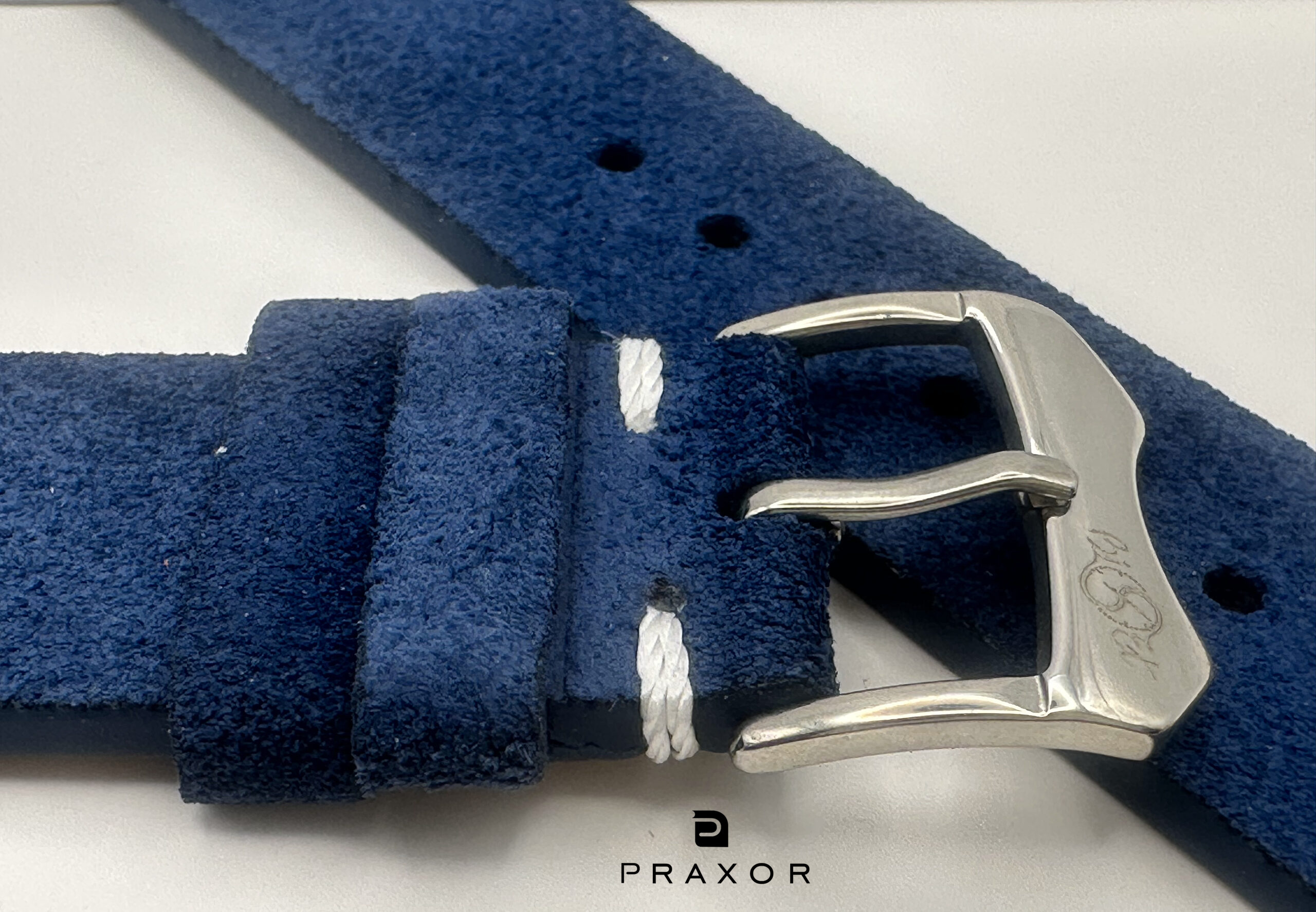
And perhaps that is why it still fascinates: because in an age saturated with soulless surfaces, leather preserves something of the ancient order. Something of morning and evening. Something of the repeated rite. Something of the continual.






Leave a Reply